Energy Storage in India
Abstract:
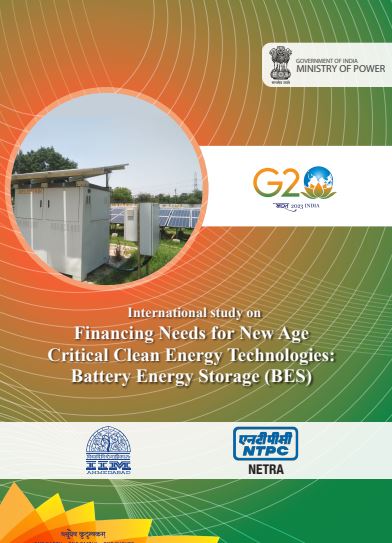
This study evaluates the techno-economic feasibility of deploying grid-connected Battery Energy Storage Systems (BESS) in an Indian power distribution company (DISCOM). It assesses how BESS can reduce peak demand, improve load management, and enhance grid reliability. The analysis considers capital investment, operational costs, and potential revenue streams under different operating scenarios. Results indicate that strategic BESS deployment can lower power procurement costs and improve distribution system efficiency. The study highlights that economic viability depends on battery costs, tariff structures, and utilization rates. Policy incentives and appropriate regulatory mechanisms significantly improve project feasibility. The findings provide practical guidance for DISCOMs on integrating BESS into distribution networks to support renewable energy integration and grid flexibility. Overall, the research demonstrates that grid-connected BESS can be a cost-effective solution for strengthening India's evolving electricity distribution system.