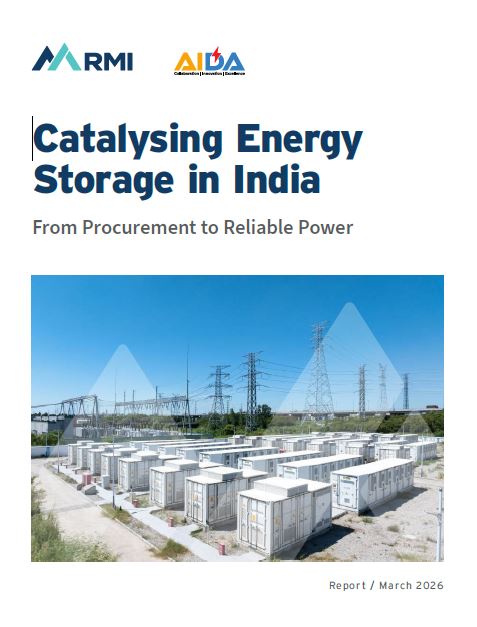
Energy Storage in India


Abstract:
This thesis investigates the contribution of Battery Energy Storage Systems (BESS) to enhancing the resilience and reliability of power systems under extreme weather events. A comprehensive BESS modelling framework is developed that incorporates battery cell reliability and capacity degradation to evaluate BESS performance in different operational scenarios. Through detailed case studies, the research analyses how BESS deployment can improve system reliability and support grid resilience. Given the growing global adoption of BESS, the study also addresses the critical challenge of selecting optimal installation locations to maximize benefits not only for the installation site but also for surrounding network nodes.
To identify suitable BESS deployment strategies, the thesis proposes an advanced three-step dispatching and location-selection framework based on ELECTRE multi-criteria decision analysis (MCDA) combined with objective entropy weighting methods. The study further incorporates conditional value at risk of energy not supplied (ENS) to support decision-making under extreme operating conditions. In addition, optimization techniques such as Particle Swarm Optimization and a specially designed Q-learning algorithm are applied to improve BESS discharge control and operational efficiency. The findings demonstrate that the proposed Q-learning approach is computationally efficient and significantly enhances power system resilience, offering a robust methodology for future BESS planning and operation in modern power networks.